




 Updated on May 05, 2025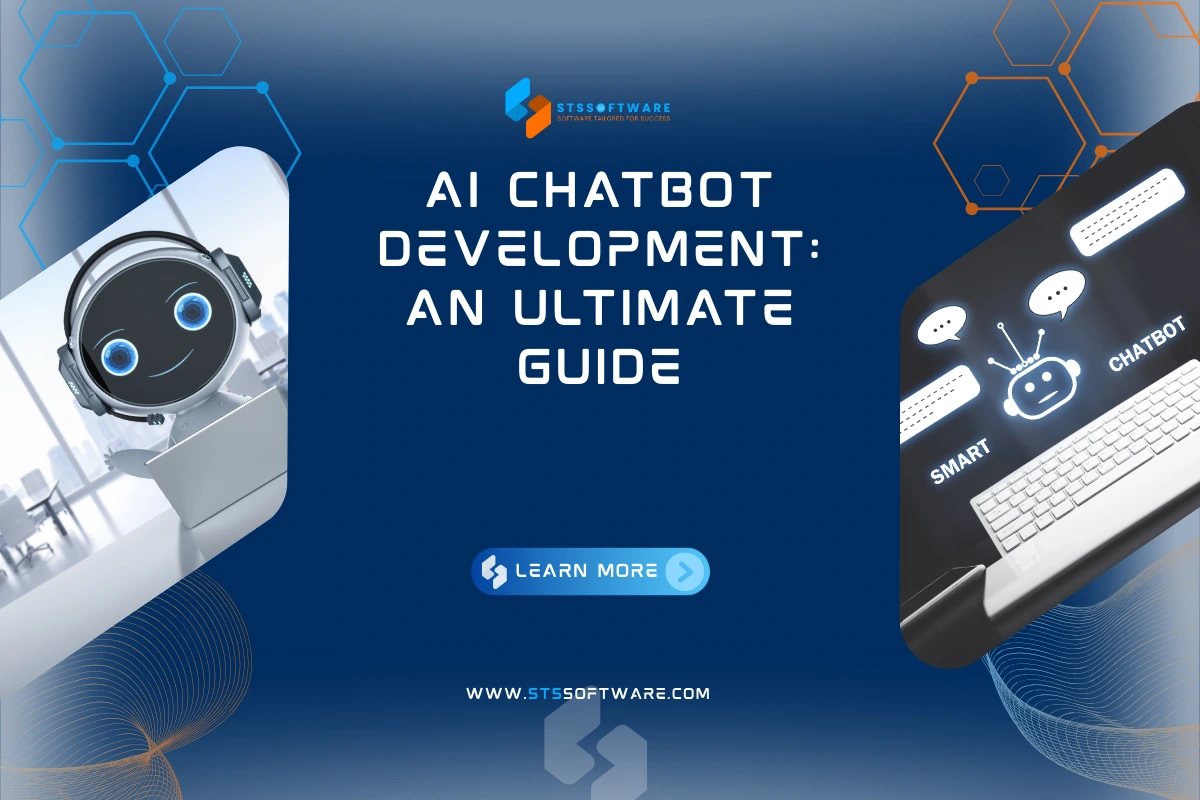
Today, with the rise of digital, AI chatbot development has become a tool to improve customer experience, reduce operational costs, and enable 24/7 engagement. It ranges from automating support to driving conversions. Then, intelligent bots are transforming the way businesses interact with their users.
We can see the rise of chatbot development will be suitable for the urgent current demand. Therefore, companies should use chatbots, but how to deploy them effectively.
This article provides a comprehensive guide to building, deploying, and scaling custom conversational agents, starting with platform selection. Whether you’re new to AI chatbot development or seeking to enhance an existing bot, you’ll gain the technical insights, tools, and strategies needed to master the process end-to-end.
Understanding AI Chatbots: Types and Capabilities
Then all of you would like to know how to build a chatbot, so we need to understand what AI chatbots are and how they work. As we know, AI chatbots are intelligent systems that simulate human-like conversations using machine learning and natural language processing (NLP). They are divided into two main types: rule-based bots and AI-powered bots, each with different chatbot building methods and functions. There are also rule-based bots that follow predefined scripts and decision trees, suitable for simple and structured interactions.
AI-powered bots use NLP and learning algorithms to understand context, offering dynamic responses and adapting to user behavior. Despite their potential, even the best systems have limits, including accuracy in complex conversations and dependency on training data. Effective AI chat bot development involves selecting the right type based on use cases, goals, and user expectations.
Essential Technologies for Modern AI Chatbot Development
Behind every great bot is a solid tech foundation essential for successful chatbot development and performance. Core components include NLP engines like Google Dialog flow, Microsoft LUIS, and open-source tools such as Rasa or spaCy. Machine learning frameworks like TensorFlow and PyTorch are now the enablers for bots to understand patterns and improve over time. There are also APIs and third-party tools that enable seamless integration with CRMs, such as payment gateways and business communication platforms. Efficient chatbot programming also includes backend logic, database connections, and deployment through platforms like AWS, Azure, or Firebase. End-to-end AI chatbot development relies on selecting scalable tools that match your business needs, budget, and technical expertise.
6-Step Process to Build a Functional AI Chatbot
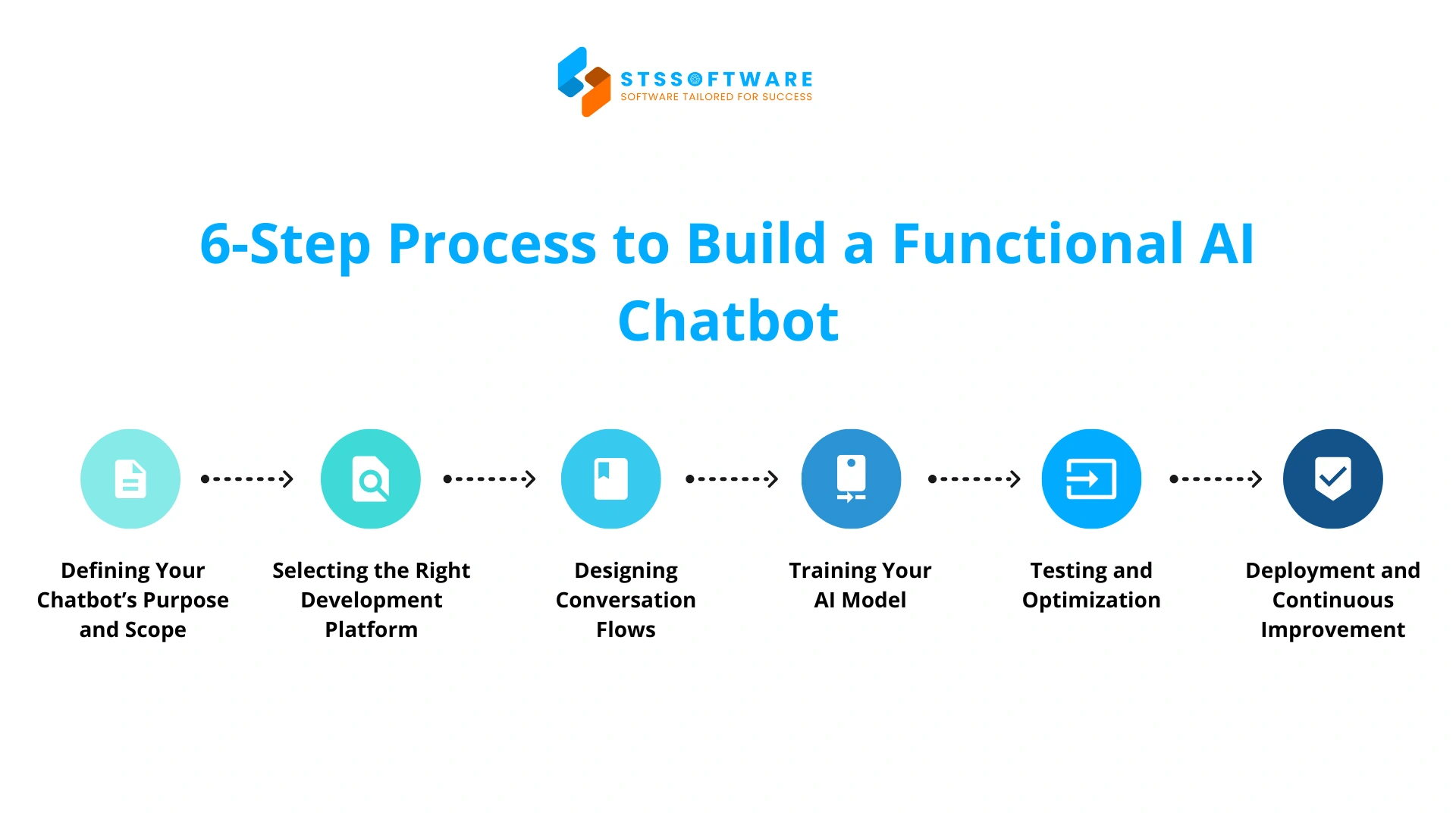
Mastering how to build ai chatbot solutions involves a structured process with well-defined stages and tools. This section walks you through how to create ai chatbot systems that are smart, scalable, and user-focused.
Defining Your Chatbot’s Purpose and Scope
- Understanding how to get started with chatbot development begins with defining what you want your bot to achieve.
- Identify specific business challenges and use cases, like lead generation, support automation, or appointment scheduling.
- Effective chatbot creation requires clear goals, user personas, and functionality aligned with your business needs.
Selecting the Right Development Platform
- Next, choose the best platform to develop chatbot solutions based on your team’s skillset and target deployment channels.
- Options include open-source tools like Rasa or Botpress, or cloud-based platforms like Dialogflow, Microsoft Bot Framework, and IBM Watson.
- Building chatbots efficiently means comparing each tool’s ease of use, integration options, and scalability.
Designing Conversation Flows
- A successful chatbot begins with well-structured conversation mapping and user journey planning.
- Use flowcharts or visual builders to map out intents, responses, and fallback logic.
- Mastering how to create a chatbot includes anticipating user behavior and planning contextual paths.
- Strong chatbot making focuses on clarity, consistency, and a smooth conversational experience.
Training Your AI Model
- Now it’s time to train your bot’s brain using labeled data and conversation logs.
- Upload intents, sample phrases, and use NLP for understanding user input and context.
- Learning how to build an ai bot includes fine-tuning algorithms to improve accuracy and reduce misinterpretations.
- Smart creating a chat bot involves feeding your system real-world data continuously for adaptive learning.
Testing and Optimization
- Test your chatbot thoroughly before public deployment to ensure reliable performance across multiple scenarios.
- Apply A/B testing, simulate various user interactions, and track conversation success rates.
- To build a chat bot that performs well, analyze metrics like response time, accuracy, and user satisfaction.
- Effective bot development also includes updating intents and refining logic based on test feedback.
Deployment and Continuous Improvement
- Deploy your chatbot across web, mobile, social media, or messaging platforms depending on your audience.
- Integrate analytics and feedback tools to monitor performance and detect bottlenecks.
- Long-term chatbots development success depends on consistent updates and learning from real-world usage.
- Understanding how to make ai chatbot solutions better over time requires a strong improvement loop and user-centric mindset.
Common AI Chatbot Development Challenges and Solutions
While building an ai chatbot offers immense benefits, developers often face technical and strategic roadblocks. One major challenge is maintaining contextual understanding across long conversations, leading to broken interactions. To solve this, use advanced NLP techniques, memory states, and context-aware models.
Another issue is integrating your chatbot with existing systems and workflows. To develop a chat bot successfully, plan your API strategy early and choose platforms with flexible integration capabilities. Security is also critical—always encrypt sensitive data and follow authentication best practices.
Lastly, avoid poor user adoption by designing intuitive flows and offering clear fallback options to human agents.
Key Performance Indicators for AI Chatbot Success
Tracking performance is essential for optimizing your chatbots creation strategy and justifying ROI. Start by monitoring engagement metrics: total sessions, average session length, and drop-off points. Next, measure user satisfaction using surveys, sentiment analysis, and resolution rates. High-performing bots excel in intent recognition accuracy and successful task completion.
Effective chatbot building includes continuous analysis of click-through rates, escalation percentages, and conversation quality. Use these KPIs to refine bot responses, update knowledge bases, and improve overall user experience.
Why Choose STS Software as Your Partner for AI Chatbot Development
When it comes to AI chatbot development, STS Software has always impressed with its deep technical expertise and customer-centric approach. Our team provides tailor-made chatbot development solutions that combine natural language understanding, machine learning, and seamless integration. Our AI development services have helped startups, enterprises, and global brands design, deploy, and scale conversational AI across a variety of industries. From strategy to support, we partner with you at every stage to ensure long-term success and user satisfaction. Choose STS Software for future-ready AI chatbot development that drives results and elevates your digital experience.
Conclusion
Currently, investing in smart AI chatbot development is a must-have factor to be successful. This guide covered how to plan, design, train, and optimize chatbots that deliver measurable value to your business. Whether you’re starting from scratch or ready to build an ai chatbot at scale, the right partner can make all the difference. Ready to take the next step? Contact STS Software today to build your intelligent chatbot and transform user engagement.


Related articles
How AI Image Processing Is Revolutionizing Business Operations in 2025
 Bruce
Bruce  28 Apr 2025
AI in Insurance: Transforming the Industry Through Intelligent Automation
28 Apr 2025 
Building the Perfect Customer Service Chatbot: A Comprehensive Strategy for Businesses
28 Apr 2025 
Transforming Business with Computer Vision AI
25 Apr 2025 
AI in CRM: Transforming Customer Relationships Through Intelligent
25 Apr 2025 
AI in Finance: Transforming Financial Services Through Intelligent Solutions
23 Apr 2025 
Understanding AI App Development Costs: From Planning to Deployment
23 Apr 2025 
Types of AI Explained: From Narrow to Superintelligence and Everything In Between
23 Apr 2025 


